
Google's November Core Update Landed Right Before Black Friday: What to Check Before You Change Anything
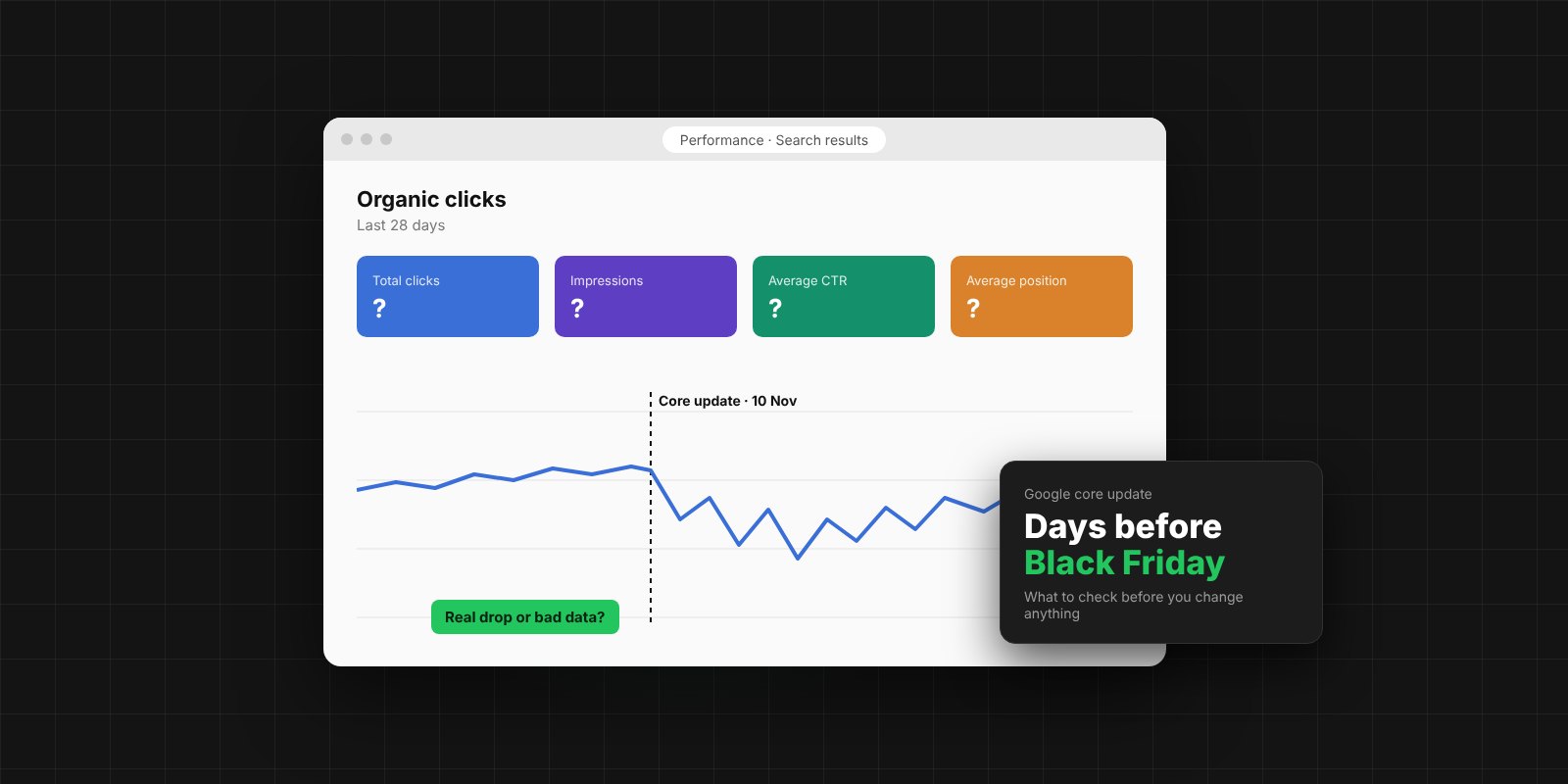
Google started a core update on 10 November, two weeks before the biggest trading weekend of the year. If your rankings have moved, the worst thing you can do this week is panic and start rewriting pages.
Core updates always cause some turbulence. This one landed during the run-up to Black Friday and Cyber Monday, when every lost click costs more than usual. Here's how to work out what's actually happened to your site, and what to do about it without making things worse.
What happened
Google began rolling out its November 2026 core update on 10 November, and Search Engine Land reports that the rollout is now complete.
A core update is a broad change to how Google judges and ranks content. It doesn't target a single tactic or penalise specific sites. Instead, Google reassesses which pages best answer each search, so some sites rise and others fall.
Google's advice is the same as always: there's no quick fix. Pages that drop haven't necessarily done anything wrong. Google has simply decided other pages are more useful for that search.
Why the timing hurts ecommerce
For online retailers, late November is when organic traffic is worth the most. Shoppers are searching with their wallets out, and category and product pages are doing the heavy lifting.
A ranking drop in a normal month is a problem you can fix over a few weeks. A drop in Black Friday week means lost sales you won't get back. That makes the pressure to react immediately much stronger, which is exactly when businesses make expensive mistakes.
There's a second complication: search results themselves are changing. Google's AI Overviews now show citation cards in full, and Microsoft is serving ads inside Bing's AI answers. If your traffic has dipped, the core update may not be the only cause. (We covered this in Google's AI Overviews Are Stealing Your Traffic.)
Is it a real drop, or bad data?
Before you act, make sure the problem is real. This month, SEO specialists, including Joy Hawkins, have flagged odd click data in Google Search Console: unusually high click-through rates on keywords where sites rank nowhere near the top. Rank-tracking tools have also reported Google serving altered results to their bots.
In other words, your dashboards may not be telling you the whole truth right now. Work through these checks before drawing conclusions:
-
Check at page level, not site level. A site-wide average hides what's going on. Find the specific pages that lost clicks.
-
Check at keyword level. Look for keywords where the click-through rate doesn't make sense for the position. If it looks too good to be true, treat it with caution.
-
Compare like with like. Compare against the same week last year, not last week. Black Friday traffic patterns distort week-on-week comparisons.
-
Cross-check with GA4 and sales data. If Search Console says clicks fell but organic sessions and revenue in GA4 are steady, the problem may be in the reporting, not your rankings.
-
Check your competitors. If the pages now outranking you are genuinely more helpful, that tells you what Google wants. If they're not, wait for things to settle.
What to do this week
Don't make big changes to your site. Rewriting content, changing page structures or migrating URLs during Black Friday week adds risk at the worst possible time. Any SEO changes will also take weeks to show up in rankings, long after the sales have ended.
Use paid search to cover the gaps. This is where PPC earns its keep. If key category or product pages have slipped, put more paid budget behind those exact search terms so you stay visible while organic recovers.
-
Raise budgets on campaigns covering your affected product categories.
-
Check that Shopping and Performance Max feeds are clean and prices are up to date.
-
Add Google's Deal Ends annotations to time-limited offers. The feature is now out of beta, but it follows specific holiday rules, so check your promotions qualify.
-
Don't put redemption dates in Merchant Center promotion titles. Google no longer allows them.
Keep a log. Note the dates of any ranking changes, campaign changes and promotions. You'll need it in December to work out what actually caused what.
Your December checklist
Once the sales are over and rankings have settled, work through this list:
-
Compare organic clicks and revenue for the four weeks before and after 10 November, page by page.
-
List the pages that dropped and the searches they lost.
-
Review the pages now ranking above you. What do they answer that yours don't?
-
Improve the content on your most valuable affected pages: clearer answers, better product detail, real expertise.
-
Check how often your pages are cited in AI Overviews for your key searches.
-
Scale back the extra PPC budget gradually as organic traffic recovers.
-
Set up alerts so you catch the next core update early, not halfway through it.
Need a second pair of eyes?
Core updates are stressful, especially in peak season. If your rankings have moved and you're not sure whether it's the update, a reporting glitch or something else, our SEO and PPC team can help. We'll look at your data, tell you what's actually going on, and help you protect your sales while things settle.